3 posts tagged with "AI Tooling"

View All Tags

Does Code Quality Still Matter?

· 9 min read
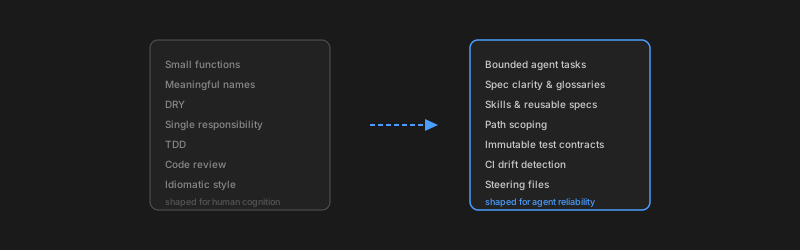
Code to Constraints — the shift in engineering discipline

Everyone's quietly asking this. The answer isn't as obvious as it used to be.

An agent writes 400 lines. Tests pass. Lint clean. I can't tell whether the decisions in it are good or just plausible. And if nobody's reading this line-by-line anymore — what does "quality" even mean here?

A note: this is where my thinking is today — June 2026. The tooling is moving fast. Some of what follows might look different in six months.

Your Agents Are Running. So Why Are You Still Exhausted?

· 10 min read
Cognitive Load in the Age of Agents

In software engineering, cognitive load refers to the total amount of mental effort being used in a developer's working memory to complete a task. Think of it like the RAM in a computer: if you try to run too many heavy applications at once, the system slows down, glitches, or crashes.

When a developer's cognitive load exceeds their mental capacity, productivity drops, the quality of code suffers, and the risk of burnout increases.

Your Governance Framework Is Protecting You From Progress (A $5.4 Billion Case Study)

· 16 min read
Governance Theatre

Somewhere in your organisation right now, an engineer wants to use a tool. It's open source. It's battle-tested. Half the Fortune 500 runs it in production. But first, they need to fill out a vendor assessment form, get InfoSec sign-off, wait for procurement to confirm there's a contract in place, and then — maybe, in four to six months — they'll get a "yes" or a "no" from a committee that's optimised for risk avoidance, not risk management.

This isn't an argument against governance. Governance matters — especially in regulated industries. This is an argument that the way most enterprises do governance today is broken: optimised for the appearance of control rather than the reality of it. The question isn't whether to govern. It's whether your governance framework is actually reducing risk — or just reducing speed.

Meanwhile, the startup down the road shipped the feature last Tuesday.

But hey, at least you've got a contract. You can sue them if things go wrong. Right?