The Screen Between Us: Why the Same Person Helps in Person and Ghosts on Slack
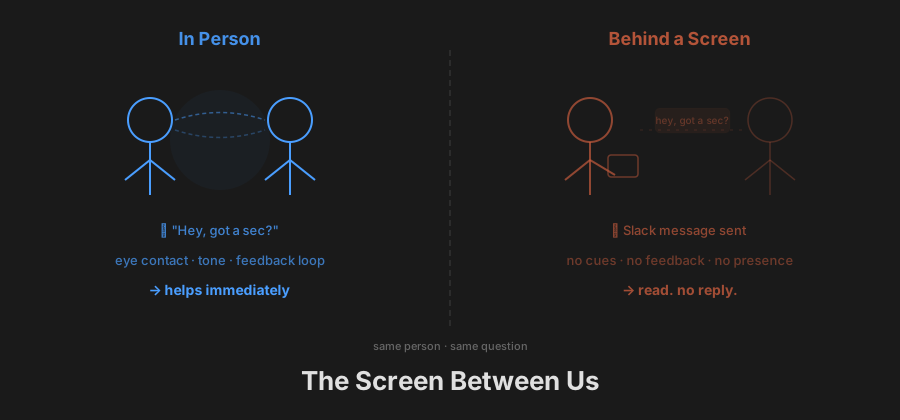
I walked up to someone's desk last month. Asked about a decision their team had made — something I needed context on before a planning conversation. They stopped what they were doing, turned around, and walked me through the reasoning. Four minutes. Problem solved.
Two weeks later, same person, same kind of question. I sent it on Slack. Clean message. Tagged them. Even added context about what I'd already tried. Read receipt appeared. Then... nothing. Three hours later, a thumbs-up emoji. No answer.
I don't think they became a worse person between those two interactions. I think the environment changed, and the environment was doing more heavy lifting than either of us realised.
Now — here's the less flattering reading I have to be honest about. When I walked up to their desk, I removed their option to defer. They couldn't not-respond to a face standing in front of them. Maybe what I'm calling "cooperation triggered by presence" is partly just... politeness coercion? The inability to say "not now" to a body in your space? I don't know. I think both things are true simultaneously — presence genuinely activates empathy and it removes the escape hatch. I'm going to explore the presence side here because I find it more interesting, but I want to name the other thing too.